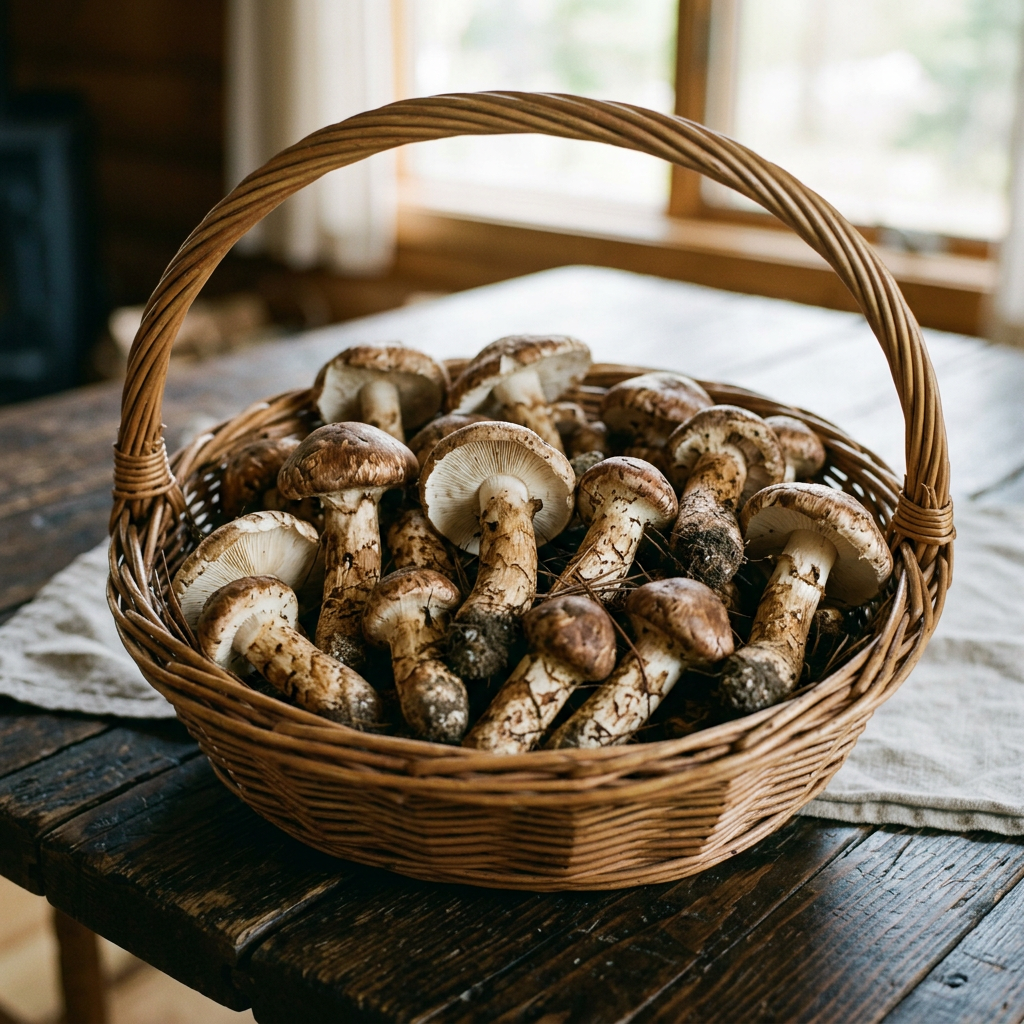
This guide assists beginners in selecting high-quality wild matsutake and other mushrooms. Key selection criteria include checking for shape, color, texture, aroma, and signs of damage. Fresh mushrooms should have a closed cap, be firm, and possess a natural fragrance. Avoid overripe, sticky, or overly packaged options to ensure quality.
A rustic basket full of freshly foraged wild mushrooms on a wooden table
A Complete Guide for Beginners
Many people only judge wild matsutake and mushrooms by their appearance, which makes it easy to buy stale, overripe, water-soaked or low-quality products. Whether for personal consumption, gifting, or export business, mastering these simple selection skills lets anyone pick high-quality wild fungi easily.
How to Choose Wild Matsutake
Check the shape High-quality matsutake has a thick stem and tightly closed, slightly curled cap with no cracks or damage. Fully opened and cracked caps mean the mushroom is overripe, with tough texture and weak aroma.
Check the color Fresh premium matsutake features light yellowish-brown skin with clear natural texture and original soil traces. Avoid those with dark discoloration, mold spots and abnormal white patches.
Touch the texture Good matsutake feels firm and springy. Soft, hollow or waterlogged ones are either stored too long or soaked in water to gain weight—stay away.
Smell the aroma Authentic wild matsutake has a rich unique pine and natural fungal fragrance. Skip items with no smell, sour odor, rotten smell or pungent odor.
Check the inside when cut open Premium matsutake has pure white and delicate flesh. Yellowish, grayish, hollow or spotted inner flesh means poor quality and bad taste.
General Tips for Choosing Other Wild Mushrooms
(Boletus, Termite Mushroom, Truffle and more)
Avoid fully opened mushrooms For all wild mushrooms: tightly closed caps are tenderest; wide open caps are always overripe.
Avoid sticky and overly wet surfaces Fresh wild mushrooms are naturally dry with slight soil residue. Sticky and dripping ones are usually water-soaked, easy to spoil and unsafe to eat.
Check for wormholes and damage Slight wormholes are normal for wild mushrooms. Reject those with large worm infestation, rotten edges, mold and broken leaking flesh.
Identify freshness by smell Good wild mushrooms have a natural fresh fragrance. Never buy ones with sour, rancid or moldy smells.
Common Buying Pitfalls to Avoid
Bigger is not always better; well-proportioned and firm mushrooms are top grade.
Over-cleaned mushrooms with no soil are usually washed by water, losing flavor and hard to preserve.
Wild mushrooms deteriorate fast at room temperature; cold chain storage is recommended for longer freshness.
Avoid overly packaged or artificially waxed mushrooms, which are used to cover quality flaws.
Simple Summary
Choose matsutake and wild mushrooms by this rule: Curled cap, thick stem, natural color; Dry, firm and rich in natural aroma; No rot, no stickiness, no over-opening—these are the genuine premium wild fungi.